Resistance Wire (Electric Heating Alloy) Procurement Guide: Selection, Field Insights & Bulk Purchasing
2026-05-21
.gtr-container-k7p9z2 {
font-family: Verdana, Helvetica, "Times New Roman", Arial, sans-serif;
color: #333;
line-height: 1.6;
padding: 15px;
max-width: 960px;
margin: 0 auto;
box-sizing: border-box;
}
.gtr-container-k7p9z2 p {
margin-bottom: 1em;
text-align: left !important;
font-size: 14px;
}
.gtr-container-k7p9z2 strong {
font-weight: bold;
}
.gtr-container-k7p9z2 .gtr-heading-1 {
font-size: 18px;
font-weight: bold;
margin-top: 2em;
margin-bottom: 1em;
color: #333;
text-align: left !important;
}
.gtr-container-k7p9z2 .gtr-heading-2 {
font-size: 16px;
font-weight: bold;
margin-top: 1.5em;
margin-bottom: 0.8em;
color: #333;
text-align: left !important;
}
.gtr-container-k7p9z2 .gtr-heading-3 {
font-size: 14px;
font-weight: bold;
margin-top: 1em;
margin-bottom: 0.5em;
color: #333;
text-align: left !important;
}
.gtr-container-k7p9z2 ul,
.gtr-container-k7p9z2 ol {
list-style: none !important;
padding-left: 0;
margin-left: 20px;
margin-bottom: 1em;
}
.gtr-container-k7p9z2 ul li,
.gtr-container-k7p9z2 ol li {
position: relative;
margin-bottom: 0.5em;
font-size: 14px;
text-align: left !important;
list-style: none !important;
padding-left: 1.5em;
}
.gtr-container-k7p9z2 ul li::before {
content: "•" !important;
position: absolute !important;
left: 0 !important;
color: #C8A264;
font-size: 1.2em;
line-height: 1.6;
}
.gtr-container-k7p9z2 ol li::before {
content: counter(list-item) "." !important;
position: absolute !important;
left: 0 !important;
color: #C8A264;
width: 1.5em;
text-align: right;
line-height: 1.6;
}
.gtr-container-k7p9z2 table {
width: 100%;
border-collapse: collapse !important;
margin-bottom: 1.5em;
font-size: 14px;
border: 1px solid #ccc !important;
}
.gtr-container-k7p9z2 th,
.gtr-container-k7p9z2 td {
padding: 8px 12px !important;
text-align: left !important;
vertical-align: top !important;
border: 1px solid #ccc !important;
word-break: normal;
overflow-wrap: normal;
}
.gtr-container-k7p9z2 th {
font-weight: bold !important;
background-color: #f5f5f5;
color: #333;
}
.gtr-container-k7p9z2 tbody tr:nth-child(even) {
background-color: #f9f9f9;
}
.gtr-container-k7p9z2 .gtr-contact-info {
margin-top: 2em;
padding-top: 1.5em;
border-top: 1px solid #eee;
text-align: left !important;
font-size: 14px;
}
.gtr-container-k7p9z2 .gtr-contact-info strong {
color: #C8A264;
}
.gtr-container-k7p9z2 .gtr-table-wrapper {
overflow-x: auto;
margin-bottom: 1.5em;
}
@media (min-width: 768px) {
.gtr-container-k7p9z2 {
padding: 25px;
}
.gtr-container-k7p9z2 .gtr-heading-1 {
font-size: 20px;
}
.gtr-container-k7p9z2 .gtr-heading-2 {
font-size: 18px;
}
.gtr-container-k7p9z2 .gtr-heading-3 {
font-size: 16px;
}
.gtr-container-k7p9z2 table {
display: table;
}
.gtr-container-k7p9z2 .gtr-table-wrapper {
overflow-x: visible;
}
}
Tankii Technical Team
With over 20 years of R&D and manufacturing experience in electric heating alloy wire (resistance wire), we focus on providing high-quality nickel-chromium, iron-chromium-aluminum, and copper-nickel resistance wire for various heating equipment – from household appliances to industrial furnaces. Working closely with hundreds of equipment manufacturers and end‑users worldwide, we understand that the performance difference of a single resistance wire can determine the success or failure of an entire heating device.
As the core component for electric heat conversion, the performance of resistance wire directly determines:
Heating power stability and design compliance
High‑temperature service life and oxidation resistance
Structural reliability against deformation and creep
Thermal cycling tolerance and risk of brittle fracture
Energy efficiency and maintenance cost of the complete equipment
As a specialist manufacturer and solution provider for resistance alloys for over 20 years, we serve industries including home appliances, heat treatment, ceramics, glass, automotive, and electronics. This guide explains not only how to select the right resistance wire for your application, but also analyzes key decision points from the perspective of volume purchasing and batch‑to‑batch consistency.
Why Resistance Wire Selection Is More Complex Than “Checking Gauge and Measuring Resistance"
Resistance wire may seem simple – a metal wire that gets hot. But in actual engineering, it is a core functional component under the coupled fields of electricity, heat, mechanics, and atmosphere. A proper resistance wire selection must simultaneously satisfy:
Resistivity and tolerance: The resistance per unit length must match the designed power; deviation causes power over‑ or under‑specification.
High‑temperature oxidation resistance: Formation of a stable oxide scale to prevent continuous oxidation and burnout.
Adequate hot strength: Resistance to self‑weight and thermal stress at high temperatures – no sagging, no short circuits.
Workability and weldability: Easy to coil, bend, spot weld, or TIG weld without cracks or localized embrittlement.
Predictable service life: A clear expected life under specific operating conditions (temperature, atmosphere, start/stop frequency).
Incorrect selection or uncontrolled material quality can lead to uneven heating, power drift, element deformation and short circuits, premature burnout, or even fire hazards.
A proven selection sequence: Define operating temperature and atmosphere → Select alloy system (Ni-Cr / Fe-Cr-Al / Cu-Ni) → Determine grade and wire diameter → Design surface load → Evaluate supplier batch consistency
Common Types of Resistance Wire and Their Applications
Resistance wire is mainly divided into three alloy systems, each with its own advantages and limitations.
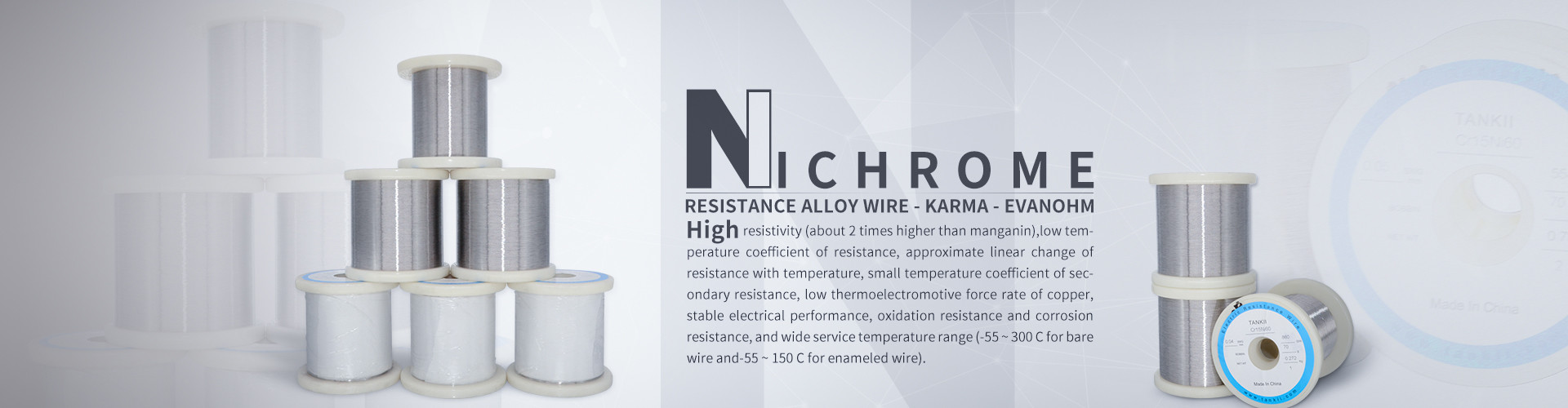
1️⃣ Nickel-Chromium Resistance Wire (Ni-Cr, e.g., Ni80Cr20, Ni60Cr15)
Characteristics: Austenitic structure, high hot strength, good toughness, not prone to brittle fracture; oxidation resistance generally up to 1200°C (Ni80) or 1150°C (Ni60).
Advantages: Excellent workability, can be drawn into fine wire, good weldability; resistant to rust and relatively good corrosion resistance.
Limitations: Relatively high cost; susceptible to “green rot" in sulfur‑bearing atmospheres.
Typical applications: Domestic ovens, hair dryers, electric heating tubes, small industrial furnaces, heating elements in vibrating environments.
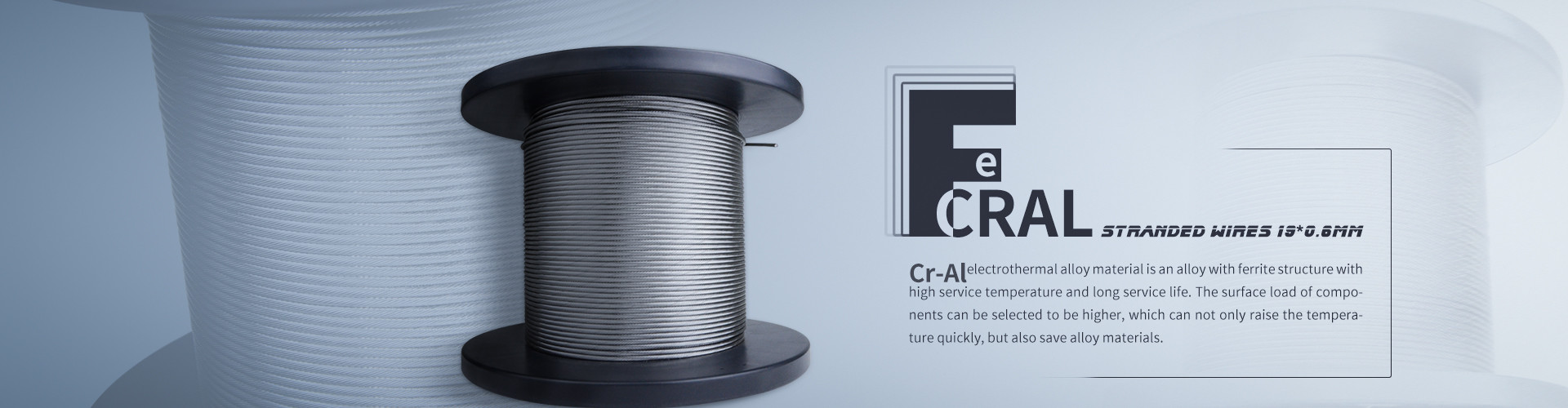
2️⃣ Iron-Chromium-Aluminum Resistance Wire (Fe-Cr-Al, e.g., 0Cr21Al6, 0Cr25Al5)
Characteristics: Ferritic structure, maximum service temperature up to 1400°C (depending on Al content); forms an Al₂O₃ scale with excellent oxidation resistance.
Advantages: Higher temperature capability, lower cost than Ni-Cr; higher resistivity, saving material usage.
Limitations: Low hot strength, prone to creep and sagging; high brittleness at room temperature, easily cracks when bent cold; more difficult to weld.
Typical applications: High‑temperature industrial kilns, ceramic sintering furnaces, glass annealing lehrs, laboratory muffle furnaces.
3️⃣ Copper-Nickel Resistance Wire (Cu-Ni, e.g., Constantan, Manganin)
Characteristics: Low temperature coefficient of resistance (TCR), small resistance change with temperature; stable thermoelectromotive force against copper.
Advantages: First choice for precision resistors, used for current sensing, shunts, extension wires.
Limitations: Not high‑temperature resistant (generally 1500°C)
Brittle, high cost
High‑temperature lab furnaces
Induction heating
Fast, non‑contact
Complex equipment, high cost
Special metal heat treatment
Conclusion: Resistance wire remains the most cost‑effective and widely used form of electric heat conversion.
What Industrial Users and Procurement Professionals Truly Value
Based on long‑term industry observation, professional resistance wire buyers typically prioritize:
Clear alloy grade and compliance with standards (ASTM B267, GB/T 1234, etc.)
Measured resistivity data per batch with tolerance ranges
Mechanical property reports including grain size, tensile strength, elongation
Traceable original MTRs supporting third‑party retesting
Reliable delivery lead times and protective packaging to avoid transit damage
Technical support capability – assistance with surface load calculation, coiling parameter optimization, failure analysis
Batch consistency and technical transparency are far more valuable than a low price alone.
Final Summary
Selecting the right resistance wire directly affects:
Power accuracy and temperature uniformity of heating equipment
Element replacement frequency and maintenance costs
Overall production line efficiency and energy consumption
Final product quality consistency and brand reputation
Resistance wire is small, but it is the “heart" of heating equipment. Choose the right material, control impurities and grain size, design proper surface load – and you get a reliable, durable device. Conversely, focusing only on price and grade while ignoring microstructure and batch consistency will lead to frequent downtime.
When purchasing in volume, insisting on detailed test data, batch traceability records, and process control evidence is the only way to ensure that what you buy is not “wire that looks the same," but resistance wire that will heat stably and reliably for the long term.
[Contact the factory: east@tankii.com / Request support]
*Need resistance wire selection advice for your specific power, temperature, and furnace type?*
Contact us to request your copy of the “Resistance Wire Surface Load Calculation Table" and a free technical consultation.
อ่านเพิ่มเติม